A car accident can change your entire day — or your entire life — in seconds.
Whether the crash happened on Johnston Street, Ambassador Caffery Parkway, I-10, Verot School Road, or a smaller Lafayette neighborhood road, the moments after an accident are often confusing, emotional, and overwhelming.
Many people are unsure:
- whether they should call police
- what evidence matters
- how insurance claims work
- when injuries become serious
- or whether they should speak with a lawyer
Insurance companies often begin investigating claims soon after an accident. What you do in the first few hours and days may affect your health, the documentation available, and any future insurance or legal claim.
1. Move to Safety and Call 911
Your priority is safety.
If possible:
- move vehicles out of traffic
- turn on hazard lights
- check for injuries
- avoid standing near active roadways
Even if the accident initially seems minor, always take the situation seriously. Some injuries — especially neck, back, or head injuries — may not show symptoms immediately.
Louisiana law requires certain accidents involving injury, death, or qualifying property damage to be reported to law enforcement. (Citation: Louisiana Legislature – RS 32:398 – https://legis.la.gov/legis/Law.aspx?d=88361)
Drivers should generally contact police after any accident involving injuries or substantial damage.
Calling police creates an official accident report that may assist insurance companies and attorneys when evaluating the accident.
2. Get Medical Attention Immediately
One common issue after a Lafayette car accident is delaying medical care.
Adrenaline can temporarily hide pain. Many accident victims feel “fine” initially, only to experience symptoms hours or days later.
Common delayed injuries include:
- whiplash
- spinal injuries
- concussions
- internal injuries
- soft tissue damage
- traumatic brain injuries
Getting prompt medical treatment helps:
- protect your health
- create medical documentation
- create medical records that may be relevant when evaluating an injury claim
- strengthen future injury claims
If emergency treatment is not required, follow up with a doctor as soon as possible.
3. Take Photos and Gather Evidence
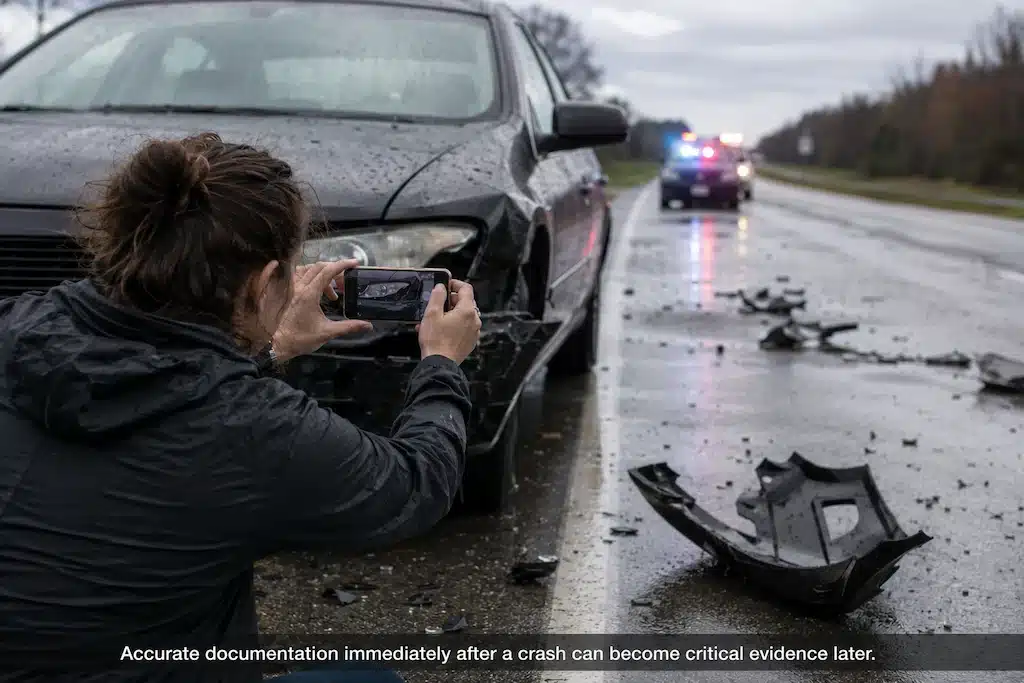
Evidence disappears quickly after a crash.
If you are physically able, document:
- vehicle damage
- skid marks
- debris
- road conditions
- traffic signs
- weather conditions
- visible injuries
Also collect:
- names and phone numbers
- insurance information
- witness contact information
- vehicle details
In Lafayette accident cases, even small details may become important during insurance investigations or legal proceedings involving fault and damages.
4. Avoid Admitting Fault at the Scene
After an accident, many people instinctively apologize — even when they are not responsible.
Avoid statements like:
- “I didn’t see you.”
- “I’m sorry”
- “It was my fault”
Louisiana follows a modified comparative fault system with a 51% bar (effective January 1, 2026), meaning a person found 51% or more at fault cannot recover damages, while those below 51% recover reduced by their percentage of fault. (Citation: Louisiana Legislature – https://www.legis.la.gov/legis/law.aspx?d=109387)
Even casual statements can later be used by insurance companies to reduce or deny claims.
Stick to:
- exchanging information
- speaking honestly with police
- describing facts only
5. Be Careful When Speaking With Insurance Companies
Insurance adjusters may contact you quickly after the crash.
Remember:
Insurance companies investigate claims and may dispute liability, damages, or the value of a claim.
They may:
- ask for recorded statements
- pressure quick settlements
- question injuries
- attempt to shift blame
- ask misleading questions
Many accident victims consider settlement offers before fully understanding:
- the full extent of injuries
- future medical costs
- lost wages
- long-term complications
Before agreeing to any settlement, it is important to understand the potential damages that may be available under Louisiana law and how your individual circumstances may affect the value of a claim.
6. Keep Records of Everything
Strong documentation can significantly improve an injury claim.
Keep copies of:
- medical bills
- prescriptions
- accident reports
- repair estimates
- lost wage records
- insurance communication
- medical appointments
Also consider keeping a recovery journal documenting:
- pain levels
- physical limitations
- missed work
- emotional stress
- treatment progress
This helps demonstrate how the accident affected your daily life.
7. Understand Louisiana’s Time Limits for Injury Claims
Louisiana law imposes a one-year deadline for filing most personal injury claims, though the applicable deadline may depend on the facts and circumstances of the case. (Citation: Louisiana Legislature – https://www.legis.la.gov/legis/LawPrint.aspx?d=83443)
Waiting too long may affect your ability to pursue compensation.
Because accident timelines, evidence preservation, and insurance negotiations can become complicated, some injured individuals choose to speak with a Lafayette car accident lawyer early in the process to better understand their rights and legal options.
8. Common Causes of Car Accidents in Lafayette
Lafayette continues to experience heavy traffic growth across major roads and intersections.
Some of the most common causes of accidents include:
- distracted driving (a leading crash factor identified by NHTSA)
- speeding
- drunk driving
- aggressive lane changes
- rear-end collisions
- failure to yield
- commercial vehicle traffic (regulated under FMCSA safety standards)
- poor weather visibility
Busy corridors such as:
- I-10
- I-49
- Johnston Street
- Ambassador Caffery
- Kaliste Saloom
- Verot School Road
often see high accident activity throughout the year.
9. Common Injuries After Louisiana Car Accidents
Even relatively low-speed accidents can cause serious injuries.
Common injuries reported after car accidents include:
- neck injuries
- back injuries
- spinal cord injuries
- broken bones
- head trauma
- traumatic brain injuries
- shoulder injuries
- knee injuries
- internal bleeding
- chronic pain conditions
Some injuries may require:
- surgery
- rehabilitation
- long-term therapy
- ongoing pain management
This is why early medical documentation becomes so important.
When Should You Contact a Lafayette Car Accident Lawyer?
Not every accident requires legal action.
However, speaking with a lawyer may help when:
- injuries are serious
- fault is disputed
- insurance denies liability
- medical bills increase
- lost wages become significant
- multiple vehicles are involved
- commercial trucks are involved
- long-term recovery is expected
An experienced Lafayette car accident lawyer can help evaluate:
- potential liability
- available damages
- insurance issues
- possible legal options
Speak With a Lafayette Car Accident Attorney
If you were injured in a Lafayette car accident, understanding your legal options early may help you make informed decisions after an accident.
The aftermath of an accident can quickly become stressful — especially when medical bills, missed work, and insurance companies become involved.
The team at J. Minos Simon LTD represents individuals pursuing claims that may involve medical expenses, lost wages, pain and suffering, and other damages recognized under Louisiana law.
If you have questions about your accident or injury claim, you can contact the firm for a free consultation.
FAQs
What should I do immediately after a car accident in Lafayette?
Move to safety, call 911, seek medical attention, exchange information, and document the accident scene with photos and witness information.
Should I call police after a minor car accident in Louisiana?
In many situations, contacting police is advisable because an accident report may assist with insurance or legal issues that arise later.
How long do I have to file a car accident claim in Louisiana?
Louisiana law imposes deadlines for filing personal injury claims, and the applicable deadline may depend on the facts and circumstances of the case. Acting promptly can help protect your legal rights.
What if the insurance company offers a quick settlement?
Before accepting a settlement, it is important to consider whether it accounts for known and reasonably anticipated damages.
When should I contact a Lafayette car accident lawyer?
You should consider speaking with a lawyer if injuries are serious, fault is disputed, or insurance companies are delaying or denying compensation.
Disclaimer
This article is provided for general informational purposes only and should not be considered legal advice. Every car accident case is different, and reading this article does not create an attorney-client relationship. If you have questions about your specific situation, you should consult a qualified attorney licensed in Louisiana.
References
- Louisiana Legislature – RS 32:398 https://legis.la.gov/legis/Law.aspx?d=88361
- Louisiana Legislature – https://www.legis.la.gov/legis/law.aspx?d=109387
- Louisiana Legislature – https://www.legis.la.gov/legis/LawPrint.aspx?d=83443
- NHTSA – Distracted Driving Dangers and Statistics – https://www.nhtsa.gov/risky-driving/distracted-driving