Louisiana highways see heavy commercial truck traffic every day.
Major transportation routes like:
- Interstate 10
- Interstate 49
- US Highway 90
- Highway 182
carry thousands of commercial vehicles transporting goods across Louisiana and neighboring states.
While commercial trucking is essential to the economy, accidents involving 18 wheelers are often devastating because of the size and weight of these vehicles.
A fully loaded tractor-trailer can weigh up to 80,000 pounds under federal limits. (Citation: U.S. Department of Transportation / Federal Highway Administration – https://ops.fhwa.dot.gov/freight/policy/rpt_congress/truck_sw_laws/index.htm/)
Because of their size and weight, even a single mistake involving an 18 wheeler can result in serious injuries or fatalities, depending on the circumstances.
Understanding the most common causes of Louisiana truck accidents can help drivers stay aware of risks — and help accident victims better understand the factors that may be considered during a liability investigation after a crash.
Why 18 Wheeler Accidents Are Often More Severe
Truck accidents are very different from ordinary car crashes.
Because of their size, commercial trucks:
- require longer stopping distances
- have larger blind spots
- are harder to maneuver
- create greater impact force during collisions
This often leads to:
- catastrophic injuries
- multi-vehicle accidents
- highway shutdowns
- severe property damage
- potential wrongful death claims, where permitted under Louisiana law (Citation: Louisiana Legislature – https://legis.la.gov/)
Truck accident cases also tend to involve:
- commercial insurance companies
- federal safety regulations
- complex liability investigations
Liability is not automatic after a truck accident. Depending on the circumstances, responsibility may involve drivers, trucking companies, maintenance providers, cargo companies, or other parties.
1. Driver Fatigue
Driver fatigue remains one of the leading causes of truck accidents across Louisiana and the United States.
Commercial truck drivers often spend long hours on the road under strict delivery schedules.
Fatigued drivers may experience:
- slower reaction times
- poor judgment
- lane drifting
- delayed braking
- reduced awareness
Federal law restricts the number of hours a commercial driver may operate a vehicle without mandatory rest breaks under Hours of Service regulations.
(Citation: FMCSA – Hours of Service (HOS) regulations – https://www.fmcsa.dot.gov/regulations/hours-of-service)
However, violations still occur.
Depending on the circumstances, investigators may examine:
- driver logs
- electronic logging devices (ELDs)
- dispatch records
- GPS tracking
- rest schedules
to determine whether fatigue contributed to the crash.
2. Distracted Driving
Distracted driving is not limited to passenger vehicles.
Truck drivers may become distracted by:
- phones
- GPS systems
- dispatch devices
- onboard computers
- eating while driving
- communication systems
Even a brief distraction can become deadly when operating a vehicle weighing tens of thousands of pounds.
Because commercial trucks require longer stopping distances, delayed reactions can have catastrophic consequences.
3. Speeding and Aggressive Driving
Large trucks become significantly more dangerous at high speeds.
Speeding increases:
- stopping distance
- rollover risk
- jackknife potential
- impact severity
In some situations, delivery schedules or operational pressures may contribute to unsafe driving behaviors, including:
- unsafe speeds
- aggressive lane changes
- reduced rest breaks
High-speed truck accidents on Louisiana highways frequently cause severe injuries due to the force involved.
4. Poor Truck Maintenance
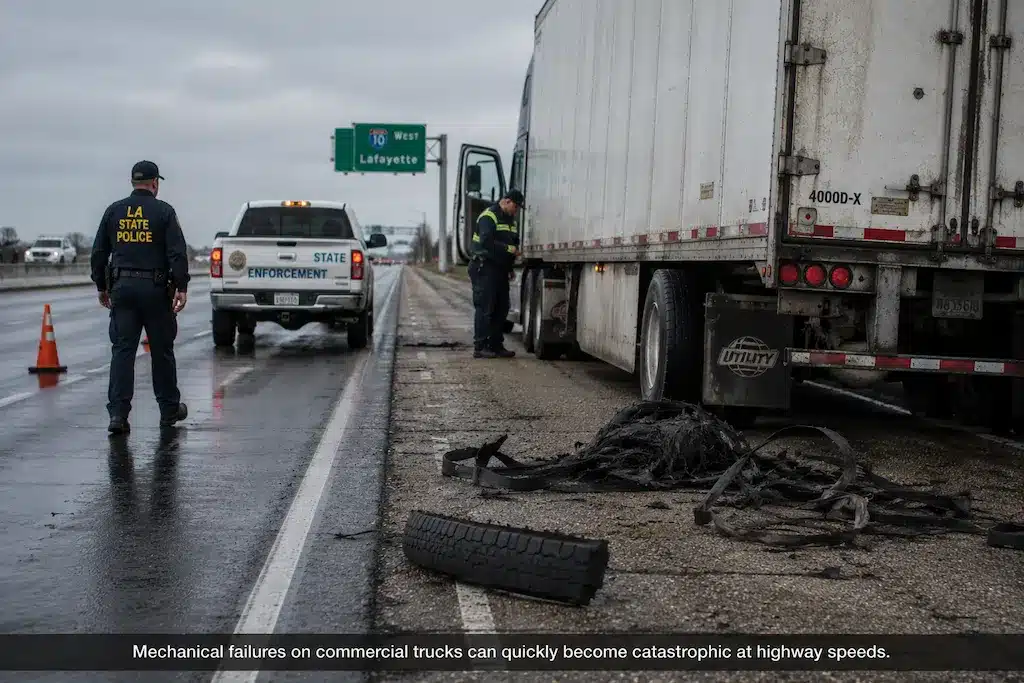
Commercial trucks require constant maintenance and safety inspections.
Mechanical failures may involve:
- brake problems
- tire blowouts
- steering issues
- lighting failures
- suspension defects
Poor maintenance can make already dangerous situations far worse.
In some Louisiana truck accident claims, investigators review:
- maintenance logs
- inspection reports
- repair history
- federal compliance records
to determine whether maintenance issues or potential safety regulation violations may have contributed to the crash.
5. Overloaded or Improperly Loaded Cargo
Improper cargo loading creates major risks for commercial trucks.
Overloaded or uneven cargo may:
- destabilize trailers
- increase rollover risk
- shift during turns
- affect braking ability
- cause cargo spills
Cargo loading problems sometimes involve:
- third-party loading companies
- warehouse operators
- freight contractors
This may result in additional parties being investigated for potential responsibility after a serious accident.
6. Truck Driver Inexperience
Operating an 18 wheeler safely requires specialized training and experience.
Inexperienced drivers may struggle with:
- blind spot awareness
- braking distances
- weather conditions
- trailer control
- highway merging
- emergency maneuvering
In some situations, inadequate training or supervision may increase accident risks.
7. Blind Spot Accidents
Commercial trucks have extremely large blind spots — often called:
“No-Zones”
These blind spots may exist:
- directly behind the truck
- beside both trailer sides
- near the front cab area
When passenger vehicles remain in these blind spots, truck drivers may not see them during:
- lane changes
- turns
- merges
Blind spot crashes are especially common on busy Louisiana highways.
8. Weather and Road Conditions
Louisiana weather can quickly create hazardous driving conditions.
Truck accident risks increase during:
- heavy rain
- flooding
- fog
- hurricanes
- wet highways
- low visibility
Because trucks require longer stopping distances, slippery roads may significantly increase crash severity.
Drivers and trucking companies are generally expected to exercise reasonable care and adjust driving practices during hazardous weather conditions.
9. Driving Under the Influence
Commercial truck drivers are held to strict standards regarding alcohol and controlled substances. (Citation: FMCSA – Drug and Alcohol Clearinghouse and testing regulations – https://www.fmcsa.dot.gov/regulations/drug-alcohol-testing/overview-drug-and-alcohol-rules)
Even so, impaired driving accidents still occur.
Impairment may involve:
- alcohol
- illegal drugs
- prescription medications
- stimulants used to stay awake
Federal regulations impose strict testing requirements for commercial drivers, especially after serious accidents.
10. Trucking Company Negligence
Sometimes accidents are not caused by drivers alone.
Trucking companies themselves may contribute through:
- unrealistic delivery schedules
- poor hiring practices
- inadequate training
- ignored maintenance
- safety regulation violations
- pressure to exceed driving limits
In serious accident cases, investigators may examine whether company policies, practices, or conduct contributed to the accident.
Louisiana Highways With Heavy Truck Traffic
Louisiana serves as a major transportation corridor for Gulf Coast commerce.
Heavy truck activity frequently occurs around:
- Lafayette
- Baton Rouge
- Lake Charles
- New Orleans
- I-10
- I-49
- Port areas
- industrial corridors
Increased commercial traffic naturally increases accident exposure across these regions.
Common Injuries in 18 Wheeler Accidents
Truck accident injuries are often severe because of the force involved, although the extent of injuries varies depending on the circumstances of the crash.
Common injuries include:
- traumatic brain injuries
- spinal cord injuries
- paralysis
- internal bleeding
- broken bones
- crush injuries
- burns
- amputations
- wrongful death
Many victims require extensive long-term treatment and rehabilitation.
For practical guidance, review what to do after a car accident in Lafayette, LA.
Evidence Often Used in Louisiana Truck Accident Cases
Truck accident investigations often rely on specialized evidence, including:
- black box data
- driver logs
- maintenance records
- electronic logging devices
- dash camera footage
- witness statements
- crash scene evidence
- accident reconstruction analysis
Preserving evidence promptly may be important after serious crashes because some records may not remain available indefinitely.
What To Do After an 18 Wheeler Accident
After a truck accident:
- seek medical attention immediately
- call law enforcement
- document the scene
- photograph vehicles and injuries
- avoid making speculative statements about fault before all the facts are known
- preserve records
- avoid quick settlement pressure
Because parties involved in a serious truck accident may begin gathering evidence soon after a crash, early evidence preservation can be important.
Louisiana Comparative Fault
Louisiana generally follows a pure comparative fault system, meaning responsibility for an accident may be allocated among multiple parties based on the facts of the case. (Citation: Louisiana Legislature – (statute on comparative fault) – https://legis.la.gov/)
Depending on the circumstances, parties that may be investigated include:
- the truck driver
- the trucking company
- the vehicle owner
- maintenance providers
- cargo loading companies
- parts manufacturers
Commercial trucking cases may involve both federal motor carrier regulations and applicable Louisiana laws.
When Should You Contact a Louisiana Truck Accident Lawyer?
Truck accident cases often involve:
- severe injuries
- commercial insurers
- multiple liable parties
- complex investigations
Legal guidance may become important when:
- injuries are serious
- liability is disputed
- questions arise regarding insurance coverage or the handling of a claim
- permanent disabilities exist
- wrongful death occurs
An experienced Louisiana truck accident attorney may help investigate:
- potential liability issues
- applicable federal regulations
- company practices and safety records
- available insurance coverage and compensation
- the extent of long-term damages
Speak With a Louisiana 18 Wheeler Accident Attorney
Truck accidents may leave victims facing medical expenses, lost income, lengthy recovery periods, permanent impairments, or emotional challenges, depending on the circumstances.
J. Minos Simon LTD represents Louisiana injury victims in cases involving:
- 18 wheeler accidents
- commercial truck crashes
- catastrophic injuries
- wrongful death claims
- trucking liability disputes
If you were injured in a Louisiana truck accident, the firm offers free consultations to discuss your legal options.
FAQs
What causes most 18 wheeler accidents in Louisiana?
Common causes include driver fatigue, speeding, distracted driving, poor maintenance, overloaded cargo, and trucking company negligence.
Why are truck accidents more dangerous than car accidents?
Commercial trucks are significantly larger and heavier than passenger vehicles, often causing more severe injuries and damage during collisions.
Can trucking companies be held responsible for accidents?
Potentially. Depending on the facts of the case, trucking companies may be held legally responsible if their policies, maintenance practices, training procedures, or regulatory compliance contributed to the accident.
What evidence is important in truck accident claims?
Important evidence may include black box data, driver logs, maintenance records, witness statements, and accident reconstruction analysis.
What should I do after an 18 wheeler accident in Louisiana?
Seek medical attention, call police, document the scene, preserve evidence, and avoid making unnecessary statements about fault before the facts have been fully evaluated.
Disclaimer
This article is provided for general informational purposes only and should not be considered legal advice. Reading this content does not create an attorney-client relationship. Laws may change, and every case depends on its unique facts. Consult a qualified Louisiana attorney regarding your specific situation. Past results do not guarantee a similar outcome.
References
- U.S. Department of Transportation / Federal Highway Administration – https://ops.fhwa.dot.gov/freight/policy/rpt_congress/truck_sw_laws/index.htm/)
- Louisiana Legislature – https://legis.la.gov/
- FMCSA – Hours of Service (HOS) regulations – https://www.fmcsa.dot.gov/regulations/hours-of-service
- FMCSA – Drug and Alcohol Clearinghouse and testing regulations – https://www.fmcsa.dot.gov/regulations/drug-alcohol-testing/overview-drug-and-alcohol-rules)
- Louisiana Legislature – (statute on comparative fault) – https://legis.la.gov/