Pedestrian accidents are often devastating.
Unlike drivers inside passenger vehicles, pedestrians have virtually no protection during collisions.
Even low-speed impacts can cause:
- traumatic brain injuries
- spinal injuries
- broken bones
- internal injuries
- permanent disabilities
- wrongful death
One of the biggest questions after a pedestrian accident is:
who was legally at fault?
In Louisiana, fault is not always automatically assigned to either:
- the driver
or - the pedestrian
Instead, liability depends heavily on:
- traffic laws
- road conditions
- visibility
- driver behavior
- pedestrian actions
- available evidence
Because Louisiana follows a pure comparative fault system, a person’s compensation may be reduced by their percentage of fault, depending on the facts and evidence presented. Fault disputes can directly affect the value of a claim after an accident.
Are Drivers Always At Fault in Pedestrian Accidents?
No.
Drivers are not automatically responsible in every pedestrian accident.
However:
drivers generally owe a duty to operate vehicles safely and remain alert for pedestrians.
At the same time, pedestrians also have responsibilities under Louisiana traffic laws.
Each accident is investigated based on:
- location
- traffic signals
- right-of-way
- visibility
- driver conduct
- pedestrian conduct
Common Situations Where Drivers May Be At Fault
Drivers may be held responsible when accidents involve:
- distracted driving
- speeding
- failure to yield
- drunk driving
- running red lights
- unsafe turns
- failing to stop at crosswalks
- ignoring pedestrian signals
For example, drivers turning at intersections may fail to notice pedestrians crossing legally in marked crosswalks.
A pedestrian accident attorney can help evaluate liability in these situations.
In busy Louisiana areas such as:
- Lafayette
- Baton Rouge
- New Orleans
pedestrian traffic and vehicle congestion can increase accident risks significantly.
Common Situations Where Pedestrians May Share Fault
Louisiana comparative fault laws may apply if pedestrians contributed to the accident.
Examples may include:
- crossing outside crosswalks
- ignoring traffic signals
- walking into traffic unexpectedly
- walking while impaired
- entering poorly visible roadways at night
- distracted walking
Even when pedestrians share some fault, they may still recover compensation under Louisiana law.
However: their compensation may be reduced according to their percentage of fault.
What Is Comparative Fault in Louisiana?
Louisiana uses a pure comparative fault system.
In many personal injury cases, a person’s compensation may be reduced by their percentage of fault, depending on the facts and evidence presented. (Citation: Louisiana Legislature – https://legis.la.gov/legis/Law.aspx?d=103025)
Example:
- total damages equal $100,000
- pedestrian is found 20% responsible
Potential recovery may be reduced accordingly.
Insurance companies may investigate pedestrian accident claims carefully, including issues involving comparative fault, because fault allocations can affect the value of a claim.
You can learn more about how this works in Louisiana comparative fault laws.
Crosswalk Laws and Pedestrian Right-of-Way
Crosswalks often play a major role in pedestrian accident investigations.
Drivers generally have a duty to yield to pedestrians who have the legal right-of-way, but both drivers and pedestrians must comply with applicable traffic laws, and liability depends on the specific circumstances.
(Citation: Louisiana Legislature – https://legis.la.gov/legis/Law.aspx?d=103287)
However, fault may still depend on:
- traffic signal timing
- visibility
- driver speed
- pedestrian actions
- roadway conditions
Crosswalk accidents are not always legally straightforward.
Distracted Driving Is a Major Cause of Pedestrian Accidents
Distracted driving continues to increase pedestrian accident risks across Louisiana.
Drivers distracted by:
- phones
- texting
- GPS devices
- in-car systems
may fail to notice pedestrians until it is too late.
Because pedestrian accidents often happen in seconds, even a brief distraction can cause catastrophic injuries.
Speeding Increases Injury Severity
Higher vehicle speeds dramatically increase pedestrian injury severity.
At higher speeds:
- stopping distance increases
- reaction time decreases
- impact force becomes more severe
Pedestrian accidents involving speeding often lead to:
- catastrophic injuries
- traumatic brain injuries
- fatal collisions
Busy Louisiana roadways with heavy traffic can become especially dangerous for pedestrians.
Nighttime Pedestrian Accidents
Many pedestrian accidents happen at night or during low visibility conditions.
Factors may include:
- poor lighting
- dark clothing
- rain
- fog
- roadway visibility issues
Insurance companies sometimes argue that visibility problems contributed to accidents.
Drivers are generally expected to operate vehicles safely based on road and weather conditions, but pedestrian conduct and visibility issues may also be considered when determining fault. (Citation: Louisiana Legislature – https://legis.la.gov/legis/Law.aspx?d=103025)
Common Pedestrian Accident Injuries
Pedestrian accidents frequently result in severe injuries because the body absorbs direct impact force.
Common injuries include:
- traumatic brain injuries
- spinal cord injuries
- broken bones
- internal bleeding
- hip fractures
- facial injuries
- crush injuries
- permanent disabilities
Many victims require:
- hospitalization
- surgery
- rehabilitation
- long-term medical care
Pedestrian Accidents Involving Children
Accidents involving children often create especially complicated liability questions.
Drivers are generally expected to exercise reasonable care when operating near schools, neighborhoods, parks, and other areas where children may be present. (Citation: Louisiana Legislature / local traffic statutes – https://legis.la.gov/legis/Law.aspx?d=103287)
Children may behave unpredictably near roadways, increasing the need for careful driving.
Important Evidence in Pedestrian Accident Cases
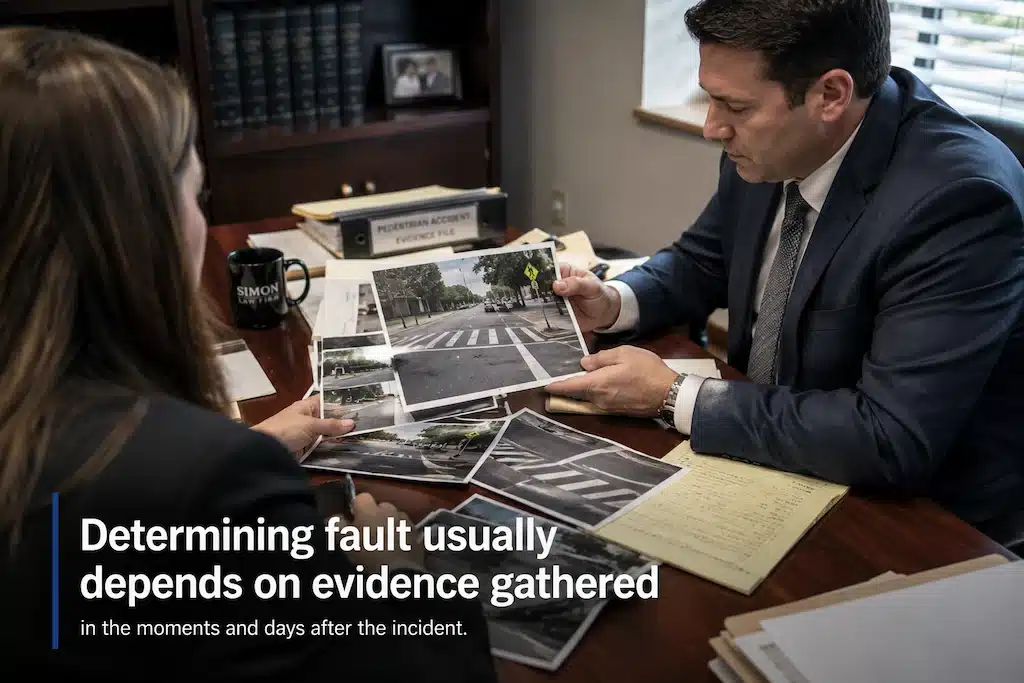
Evidence often becomes critical in determining fault.
Important evidence may include:
- police reports
- surveillance footage
- traffic camera recordings
- witness statements
- skid marks
- cellphone records
- accident reconstruction
- medical documentation
- vehicle damage
Because some evidence may become unavailable over time, documenting the accident and preserving relevant information as early as possible may be helpful. (Citation: Louisiana State Court evidence practice guidance / Louisiana State Bar resources on evidence preservation – https://www.lasc.org/)
Insurance Companies Often Dispute Pedestrian Accident Claims
Insurance companies may attempt to reduce payouts by arguing:
- the pedestrian entered traffic suddenly
- visibility was poor
- distraction contributed
- the pedestrian ignored signals
- comparative fault applies
These disputes can affect settlement discussions and the potential value of a personal injury claim.
What To Do After a Pedestrian Accident
After a pedestrian accident:
- seek medical attention immediately
- call law enforcement
- document the scene if possible
- identify witnesses
- preserve medical records
- avoid discussing fault
- keep copies of all treatment documentation
Even injuries that initially seem minor can worsen significantly over time.
Louisiana law generally imposes deadlines for filing personal injury lawsuits. Missing an applicable deadline may affect a person’s ability to pursue a claim, so obtaining legal advice promptly may be beneficial. (Citation: Louisiana Legislature — statute of limitations for delictual actions and wrongful death — https://legis.la.gov/legis/Law.aspx?d=103073)
When Should You Contact a Louisiana Pedestrian Accident Lawyer?
Legal guidance may become important when:
- injuries are serious
- fault is disputed
- insurance companies deny claims
- long-term treatment is required
- catastrophic injuries occur
- a fatal accident may give rise to a wrongful death claim under Louisiana law (Citation: Louisiana Legislature — Wrongful Death statute https://legis.la.gov/legis/Law.aspx?d=103073)
Pedestrian accident claims often involve complicated investigations and comparative fault disputes. An experienced pedestrian accident lawyer can help evaluate liability and explain the legal options that may be available.
Speak With a Louisiana Pedestrian Accident Attorney
Pedestrian accidents can leave victims and families facing:
- major medical expenses
- lost income
- long-term rehabilitation
- emotional trauma
- permanent disabilities
J. Minos Simon LTD represents Louisiana injury victims in pedestrian accident and personal injury claims involving:
- catastrophic injuries
- traumatic brain injuries
- spinal injuries
- wrongful death
- insurance liability disputes
Every accident case is different, and the availability of compensation depends on the specific facts, applicable law, and available evidence.
If you or a loved one was injured in a pedestrian accident in Lafayette or elsewhere in Louisiana, the firm offers free consultations to discuss your legal options.
FAQs
Who is usually at fault in a pedestrian accident?
Fault depends on the circumstances of the accident, including driver behavior, pedestrian actions, traffic laws, and available evidence.
Can pedestrians be partially at fault in Louisiana?
Yes. Louisiana follows a comparative fault system, meaning pedestrians may still recover compensation even if they shared some responsibility.
Do drivers always have to yield to pedestrians?
Drivers generally must yield when pedestrians have the legal right-of-way, but both drivers and pedestrians have responsibilities under Louisiana traffic laws, and liability depends on the facts of the accident.
What injuries are common in pedestrian accidents?
Common injuries include traumatic brain injuries, spinal injuries, broken bones, internal injuries, and catastrophic trauma.
What evidence helps determine fault in pedestrian accidents?
Police reports, surveillance footage, witness statements, medical records, and accident reconstruction evidence often help determine liability.
Disclaimer
This article is provided for general informational purposes only and does not constitute legal advice. Reading this material does not create an attorney-client relationship. Laws may change, and every case depends on its unique facts. Individuals should consult a qualified attorney regarding their specific legal situation.
References
- Louisiana Legislature – Civil Code / Comparative Fault statute: https://legis.la.gov/legis/Law.aspx?d=103025
- Louisiana Legislature – Traffic regulations / Right-of-way and crosswalk statutes: https://legis.la.gov/legis/Law.aspx?d=103287
- Louisiana Legislature – Statute of limitations / Wrongful death and delictual actions: https://legis.la.gov/legis/Law.aspx?d=103073
- Louisiana Supreme Court / Court resources (evidence practice and procedure): https://www.lasc.org/