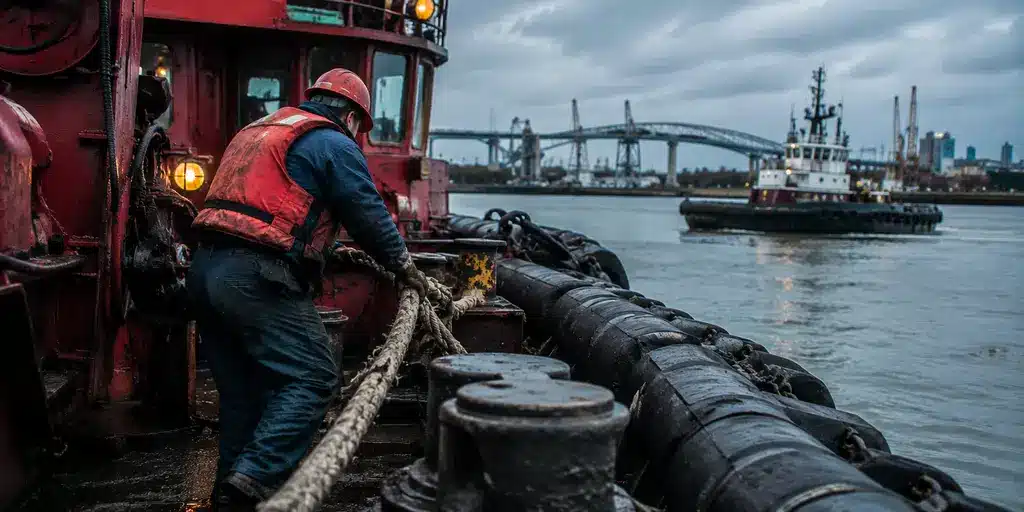
Louisiana has one of the largest offshore and maritime workforces in the country.
Thousands of workers across:
- oil rigs
- offshore platforms
- supply vessels
- tugboats
- barges
- commercial fishing vessels
- maritime transportation operations
help power the Gulf Coast economy every day.
But offshore work is also dangerous.
Serious injuries can happen because of:
- heavy equipment
- rough weather
- explosions
- slippery surfaces
- machinery failures
- transportation accidents
- unsafe working conditions
When offshore workers get hurt, the legal process is often very different from a normal workplace injury claim.
This is where:
the Jones Act
becomes extremely important.
What Is the Jones Act?
The Jones Act is a federal maritime law that allows qualified seamen to pursue negligence claims against their employers for work-related injuries. (Citation: Cornell Law School LII – https://www.law.cornell.edu/wex/jones_act)
Officially known as the Merchant Marine Act of 1920, the law protects injured maritime workers who qualify as “seamen.”
Other maritime workers may have rights under different federal laws, including the Longshore and Harbor Workers’ Compensation Act, depending on the circumstances.
Unlike standard workers’ compensation systems, the Jones Act allows injured workers to pursue claims against employers when negligence contributed to the injury.
Why the Jones Act Matters in Louisiana
Louisiana’s offshore industry is deeply connected to:
- Gulf oil operations
- maritime transportation
- offshore drilling
- vessel operations
- supply chain shipping
As a result, Jones Act claims are especially common in areas such as:
- Lafayette
- Houma
- Morgan City
- New Orleans
- Port Fourchon
- Gulf Coast offshore operations
Because maritime law is highly specialized, offshore injury claims often become much more complex than ordinary workplace accidents.
Who Qualifies Under the Jones Act?
Not every offshore worker automatically qualifies.
Generally, workers may qualify if:
- they have a substantial connection to a vessel in navigation
- their job contributes to the vessel’s function or mission
Whether someone legally qualifies as a “seaman” depends heavily on the facts of the case and applicable law. (Citation: Cornell Law School LII – Seaman)
Examples of workers who may qualify include:
- deckhands
- tugboat workers
- offshore vessel crew members
- captains
- commercial fishermen
- barge workers
- supply vessel employees
- certain oilfield maritime workers
What Makes the Jones Act Different From Workers’ Compensation?
This is one of the biggest misunderstandings offshore workers face.
Traditional workers’ compensation systems usually:
- limit lawsuits against employers
- provide fixed benefits
- restrict compensation categories
The Jones Act is different.
Unlike traditional workers’ compensation systems, the Jones Act allows qualified seamen to bring negligence claims against their employers.
This may include claims involving:
- unsafe work conditions
- inadequate training
- equipment failures
- understaffing
- unsafe procedures
- negligent supervision
What Compensation May Be Available Under the Jones Act?
Depending on the case, qualified maritime workers may be able to seek damages such as:
- medical expenses
- lost wages
- future lost earnings
- rehabilitation costs
- pain and suffering
- disability
- reduced earning capacity
Depending on the facts and legal claims involved, other legally recoverable losses may also be available.
In serious injury cases, damages may be significant if the evidence supports substantial long-term losses.
What Is Employer Negligence Under the Jones Act?
Jones Act claims typically involve proving some form of negligence.
Jones Act claims involve legal standards that differ from many ordinary personal injury cases, including unique rules regarding employer negligence and causation.
Importantly:
the burden of proof under maritime law is often different from ordinary injury claims.
Employer negligence may involve:
- unsafe equipment
- dangerous vessel conditions
- poor maintenance
- inadequate staffing
- lack of safety training
- failure to follow safety procedures
- excessive work demands
- failure to provide reasonably safe working conditions or other conduct that may constitute employer negligence under applicable maritime law
Even relatively small safety failures may become important in maritime injury claims.
Common Offshore and Maritime Injuries
Offshore work environments are physically demanding and often hazardous.
Common maritime injuries include:
- back injuries
- spinal cord injuries
- head trauma
- traumatic brain injuries
- crush injuries
- amputations
- burns
- fractures
- chemical exposure injuries
- catastrophic injuries
Some workers may require:
- surgery
- rehabilitation
- long-term medical treatment
- permanent work restrictions
For more context on typical injury patterns, see common offshore injuries on oil rigs and vessels.
Common Causes of Offshore Injuries
Maritime injury claims often involve:
- slippery decks
- falling equipment
- crane accidents
- explosions
- machinery failures
- lifting accidents
- vessel collisions
- unsafe transfers
- rough sea conditions
- inadequate safety procedures
Depending on the circumstances, offshore helicopter transportation accidents may involve maritime or other legal claims.
What Is “Maintenance and Cure”?
In addition to Jones Act protections, injured maritime workers may also have rights to:
maintenance and cure.
This is a separate maritime obligation requiring employers to provide basic living expenses (“maintenance”) and medical treatment (“cure”) after a work-related maritime injury.
Qualified seamen may be entitled to maintenance and cure benefits regardless of fault in many situations.
(Citation: Cornell LII – maintenance and cure doctrine – https://www.law.cornell.edu/wex/maintenance_and_cure)
What Happens if an Employer Denies Responsibility?
Maritime injury claims can become highly contested.
Employers or insurers may argue:
- the worker was at fault
- the injury was pre-existing
- the worker is not a qualified seaman
- the accident was unavoidable
- the injury happened off duty
Offshore injury claims are often investigated promptly by employers, insurers, and other parties.
Offshore Injury Claims Often Involve Large Companies and Insurers
Many offshore injury cases involve:
- oil companies
- maritime operators
- commercial insurers
- offshore contractors
- vessel operators
These companies often have:
- legal teams
- investigators
- insurance defense attorneys
working immediately after serious incidents.
Preserving evidence and understanding legal rights can be important after an offshore injury.
Important Evidence in Jones Act Cases
Maritime injury investigations may involve:
- vessel maintenance records
- incident reports
- witness statements
- safety manuals
- inspection records
- deck logs
- training records
- medical documentation
- communication records
Evidence can play an important role in establishing liability and damages, depending on the legal claims involved.
If the injury occurred offshore or during vessel work, a Louisiana maritime accidents lawyer can help evaluate the case.
How Long Do You Have To File a Jones Act Claim?
Jones Act claims are subject to legal deadlines.
Many Jones Act claims are governed by a three-year statute of limitations, although exceptions and other filing requirements may apply.
Waiting too long may affect your ability to pursue compensation.
Because maritime law is highly specialized, injured offshore workers often seek legal guidance early to better understand:
- deadlines
- evidence preservation
- employer obligations
- compensation rights
What Should You Do After an Offshore Injury?
After an offshore accident:
- report the injury immediately
- seek medical treatment
- document the incident
- preserve records
- identify witnesses
- avoid minimizing injuries
- keep copies of medical evaluations
Accurate documentation can become extremely important later.
Why Maritime Injury Cases Are Different From Normal Injury Claims
Jones Act and maritime injury cases involve:
- federal maritime law
- vessel classifications
- offshore jurisdiction issues
- specialized legal standards
- complex employer liability questions
Depending on the circumstances, injured workers may also have claims under other maritime laws, including claims based on an allegedly unseaworthy vessel.
In some cases, a worker’s own negligence may affect the amount of damages recoverable under applicable comparative fault principles.
When Should You Speak With a Louisiana Maritime Injury Lawyer?
Legal guidance may become especially important when:
- injuries are serious
- employers dispute liability
- maintenance and cure payments stop
- permanent disability exists
- offshore accidents involve major companies
- multiple contractors are involved
Maritime law is highly technical, and offshore claims often require detailed investigation and evidence preservation.
Speak With a Louisiana Offshore Injury Attorney
Offshore injuries can leave workers and families facing:
- lost income
- long recoveries
- major medical expenses
- permanent physical limitations
Fatal offshore accidents may give surviving family members certain rights under applicable maritime or wrongful death laws, depending on the circumstances.
J. Minos Simon, LTD represents injured offshore and maritime workers in Louisiana maritime injury claims involving:
- Jones Act injuries
- vessel accidents
- offshore platform injuries
- oil rig accidents
- helicopter transportation accidents
- maintenance and cure disputes
If you were injured while working offshore or on a vessel, the firm offers free consultations to discuss your legal rights and potential legal options.
FAQs
What is the Jones Act?
The Jones Act is a federal maritime law that allows qualified offshore and maritime workers to pursue compensation when employer negligence contributes to workplace injuries.
Who qualifies under the Jones Act?
Workers who spend significant time working on vessels in navigation and contribute to the vessel’s mission may qualify as seamen under the Jones Act.
Is the Jones Act different from workers’ compensation?
Yes. Unlike standard workers’ compensation systems, the Jones Act allows injured maritime workers to pursue negligence claims against employers.
What is maintenance and cure?
Maintenance and cure is a maritime obligation requiring employers to provide basic living expenses and medical care after work-related offshore injuries.
What injuries are common in offshore accidents?
Common offshore injuries include spinal injuries, traumatic brain injuries, burns, fractures, crush injuries, and catastrophic injuries.
Disclaimer
This article is for general informational purposes only and is not legal advice. Maritime injury claims depend on the specific facts and applicable law. Reading this article does not create an attorney-client relationship.
References
- Cornell Law School LII – Jones Act overview: https://www.law.cornell.edu/wex/jones_act
- Cornell Law School LII – Seaman (status) overview: https://www.law.cornell.edu/definitions/index.php?width=840&height=800&iframe=true&def_id=121533edb4eb0b505972d74d970e90a9&term_occur=999&term_src=Title:29:Subtitle:B:Chapter:XVII:Part:1986:Subpart:A:1986.101
- Cornell Law School LII – Maintenance and cure: https://www.law.cornell.edu/wex/maintenance_and_cure