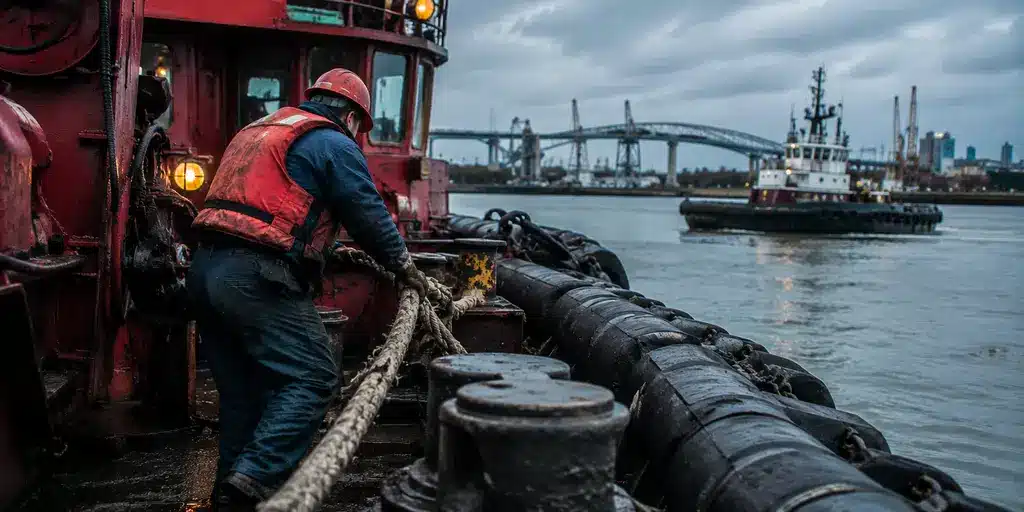
Losing a loved one in an offshore accident is one of the most devastating experiences a family can face.
Beyond the emotional impact, families are often left dealing with:
- unexpected funeral expenses
- lost household income
- unanswered questions
- financial uncertainty
- complex legal issues
When a death occurs on a vessel, offshore platform, or in another maritime setting, special laws may apply that differ from ordinary wrongful death claims.
Understanding how maritime wrongful death claims work can help families better understand their legal rights during an incredibly difficult time.
What Is a Maritime Wrongful Death Claim?
A maritime wrongful death claim is a legal action that may arise when a person dies as a result of negligence or unsafe conditions in a maritime environment.
These claims often involve fatalities occurring:
- aboard vessels
- offshore supply boats
- tugboats
- barges
- commercial fishing vessels
- offshore oil and gas operations
- navigable waterways
Maritime law provides specific remedies for surviving family members in certain situations.
Common Causes of Maritime Fatalities
Offshore and maritime work environments can be dangerous.
Common causes of fatal accidents include:
Vessel Collisions
Collisions between vessels may result in catastrophic injuries and fatalities.
Offshore Explosions and Fires
Explosions on vessels and offshore facilities can cause severe burn injuries and loss of life.
RELATED: Offshore Explosion and Fire Injuries
Equipment Failures
Defective cranes, winches, lifting equipment, and machinery can create deadly conditions.
Falls Overboard
Workers may suffer fatal injuries after falling into the water.
Slip and Fall Accidents
Dangerous deck conditions may lead to fatal injuries.
Crushing and Machinery Accidents
Heavy industrial equipment presents significant hazards in maritime operations.
Who Can File a Maritime Wrongful Death Claim?
Eligibility depends on the specific law that applies to the case.
In many situations, claims may be brought by:
- spouses
- children
- dependent family members
- estate representatives
The available legal remedies often depend on:
- where the death occurred
- the worker’s job duties
- vessel involvement
- applicable maritime laws
Because maritime wrongful death law is highly specialized, determining eligibility frequently requires a detailed legal analysis.
What Laws May Apply?
Several maritime laws may potentially govern wrongful death claims.
1. The Jones Act
When a qualifying seaman dies because of employer negligence, surviving family members may have rights under:
Jones Act claims commonly involve:
- unsafe work practices
- inadequate training
- negligent supervision
- unsafe equipment
- employer negligence
Understanding whether a worker qualified as a seaman before the accident is an important part of many maritime claims. Learn more about who qualifies as a seaman under the Jones Act.
2. Death on the High Seas Act (DOHSA)
Another important federal law is:
The Death on the High Seas Act (DOHSA)
DOHSA may apply when a death occurs beyond a certain distance from U.S. shorelines.
This law provides specific remedies for qualifying family members.
3. General Maritime Law
Certain wrongful death claims may also arise under:
General Maritime Law
The facts of the accident often determine which legal theories are available.
What Must Be Proven?
Every case is different, but wrongful death claims often involve allegations that:
- negligence occurred
- unsafe conditions existed
- equipment failed
- safety violations contributed to the death
- vessel owners failed to provide safe conditions
Investigations frequently focus on determining how the fatal accident occurred and whether it could have been prevented.
Common Examples of Negligence
Examples may include:
- Inadequate Safety Training: Employers must often provide workers with appropriate safety instruction.
- Defective Equipment: Unsafe equipment can create serious hazards.
- Failure to Follow Safety Procedures: Ignoring established safety practices may increase the risk of fatal accidents.
- Understaffing: Insufficient crew members may create unsafe working conditions.
- Unsafe Vessel Conditions: Dangerous conditions aboard a vessel may contribute to fatal injuries and also lead to separate maritime claims. Learn more about what makes a vessel unseaworthy and how unsafe vessel conditions may affect maritime injury cases.
What Compensation May Be Available?
The damages available depend on the specific maritime law that applies.
Potential compensation may include:
- Loss of Financial Support: Families may seek compensation for income the deceased would have provided.
- Funeral Expenses: Certain claims may include funeral and burial costs.
- Loss of Household Services: Compensation may be available for services the deceased would have provided to the family.
- Medical Expenses: Treatment costs incurred before death may be recoverable in some situations.
- Other Economic Losses: Additional financial losses may be considered depending on the facts of the case.
The damages available under maritime law often differ from those available in traditional state wrongful death claims.
Why Maritime Wrongful Death Cases Are Different
Maritime wrongful death claims often involve:
- federal law
- maritime regulations
- multiple potentially responsible parties
- offshore investigations
- vessel operations
- specialized legal standards
These cases are frequently more complex than ordinary wrongful death lawsuits.
Important Evidence in Maritime Wrongful Death Cases
Evidence often plays a critical role.
Important evidence may include:
- Incident Reports: Official reports often document key facts.
- Vessel Logs: Operational records may reveal important information.
- Maintenance Records: Equipment failures are frequently investigated.
- Witness Statements: Crew members and coworkers may provide valuable information.
- Safety Audits: Prior safety concerns may become relevant.
- Investigation Findings: Government and company investigations may identify contributing factors.
Preserving evidence early is often important because records can become more difficult to obtain over time.
What Should Families Do After an Offshore Fatality?
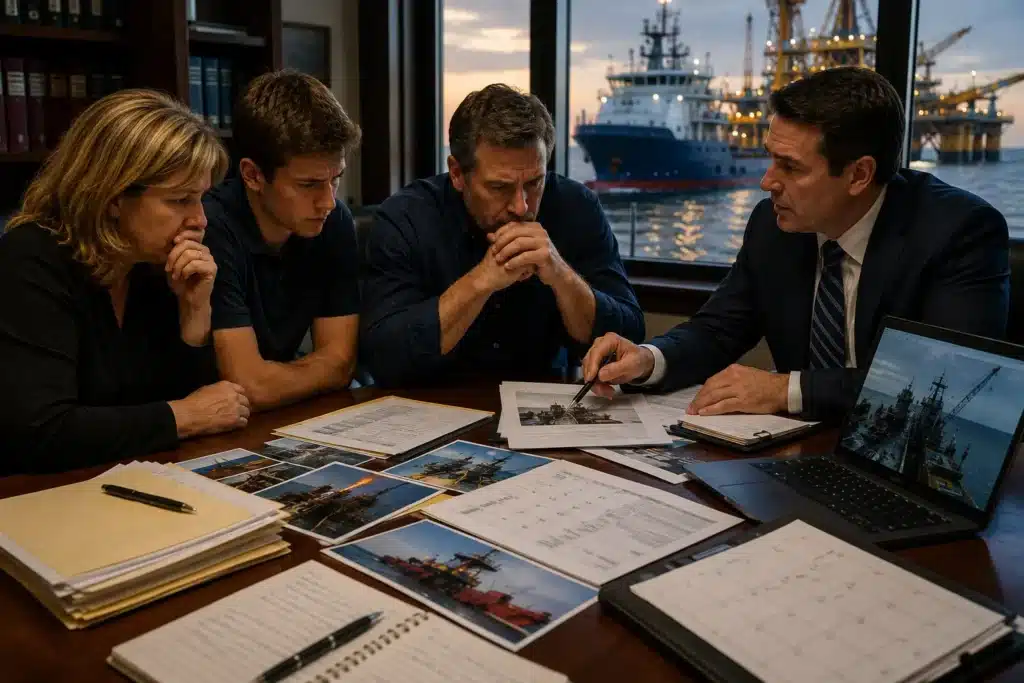
Following a maritime fatality:
– Obtain Available Documentation
Collect any reports, records, and communications related to the incident.
– Preserve Financial Records
Documentation regarding income and financial support may become important.
– Avoid Assumptions About Fault
Investigations often take time and involve multiple parties.
– Seek Information Promptly
Important evidence may need to be preserved before it is lost.
– Understand Applicable Deadlines
Maritime claims may involve important filing deadlines.
Why Employers and Insurers Often Dispute These Claims
Companies may argue:
- negligence did not occur
- another party was responsible
- the death was unavoidable
- maritime laws limit available damages
Because significant compensation may be involved, wrongful death claims are often heavily contested.
When Should You Contact a Louisiana Maritime Wrongful Death Lawyer?
Legal guidance may be especially important when:
- an offshore worker dies
- a vessel accident causes a fatality
- an explosion or fire is involved
- negligence may have contributed
- maritime laws apply
- family members are uncertain about their rights
Early investigation often helps preserve critical evidence.
If the fatality occurred because of a vessel-related accident, families may benefit from learning more about Louisiana Maritime Accident Attorney services and available legal options.
Speak With a Louisiana Maritime Wrongful Death Attorney
No legal action can replace the loss of a loved one.
However, families deserve answers when negligence, unsafe conditions, or preventable accidents contribute to a maritime fatality.
J. Minos Simon, LTD represents Louisiana families in claims involving:
- offshore fatalities
- Jones Act deaths
- vessel accidents
- maritime wrongful death claims
- catastrophic offshore incidents
Many fatal maritime accidents involve the same dangerous conditions that cause other offshore injuries. Learn more about common offshore injuries involving oil rigs and vessels.
If your loved one died in a maritime accident, the firm offers free consultations to discuss your legal rights and options.
You can contact the firm to learn more about your legal options after a maritime fatality.
FAQs
What is a maritime wrongful death claim?
A maritime wrongful death claim is a legal action arising from a death caused by negligence or unsafe conditions in a maritime environment.
Who can file a maritime wrongful death claim?
Depending on the applicable law, spouses, children, dependents, and estate representatives may have rights to pursue claims.
What laws apply to maritime wrongful death cases?
Potentially applicable laws include the Jones Act, the Death on the High Seas Act (DOHSA), and general maritime law.
What compensation may be available?
Compensation may include financial support losses, funeral expenses, medical expenses, and other economic damages depending on the law that applies.
How long do families have to file a claim?
Deadlines vary based on the facts and applicable maritime laws. Prompt legal evaluation is often important.
Recommended Authority Sources
- Jones Act (46 U.S.C. § 30104)
- Death on the High Seas Act (DOHSA)
- U.S. Coast Guard
- U.S. Department of Labor
- Cornell Law School Legal Information Institute (LII)
- Fifth Circuit Maritime Law Decisions
Disclaimer: This article is for informational purposes only and does not constitute legal advice. Maritime wrongful death claims depend on specific facts, applicable federal laws, and legal deadlines. Consult a qualified maritime attorney regarding your situation.