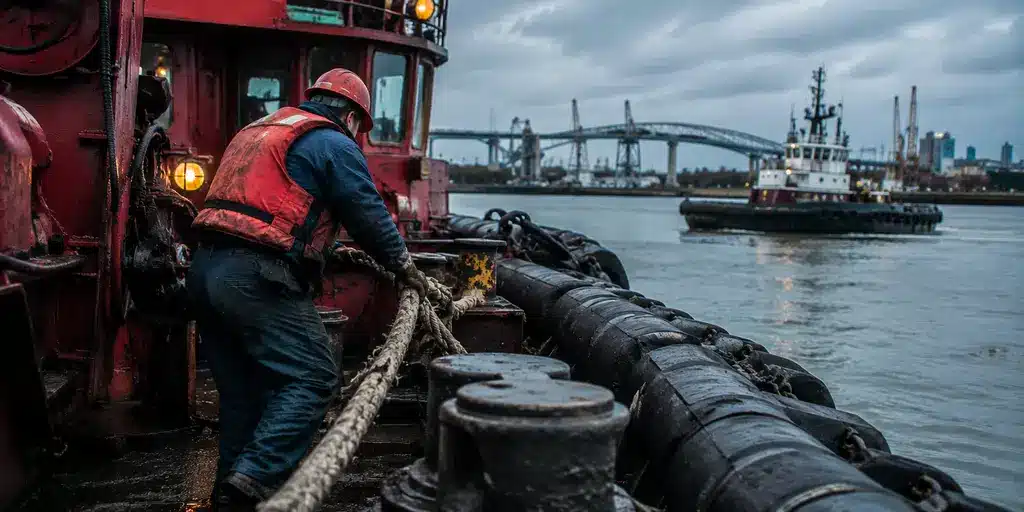
After a workplace injury, most employees assume they will file a workers’ compensation claim.
For many workers, that’s true.
But offshore workers often operate under an entirely different legal system.
If you’re injured while working aboard a vessel, offshore support boat, tugboat, barge, or other maritime vessel, you may have rights under:
The Jones Act
rather than traditional workers’ compensation laws.
Understanding which system applies is important because it can significantly affect:
- medical benefits
- lost wage recovery
- employer liability
- available compensation
- legal rights after an injury
For Louisiana’s offshore workforce, knowing the difference can have a major impact on the outcome of an injury claim.
Why Offshore Workers Are Different
Most workplace injuries in Louisiana are handled through the state’s workers’ compensation system.
However, maritime workers often fall under federal maritime law instead.
This distinction exists because offshore work involves unique risks associated with:
- vessels
- navigable waters
- maritime transportation
- offshore energy operations
As a result, offshore workers may have rights that are unavailable to traditional land-based employees.
What Is Workers’ Compensation?
Workers’ compensation is a state-based system designed to provide benefits to employees injured on the job.
In Louisiana, workers’ compensation generally operates on a:
No-Fault System
This means injured workers typically do not need to prove that an employer caused the accident.
Benefits may be available simply because the injury occurred during the course and scope of employment.
What Benefits Does Workers’ Compensation Provide?
Depending on the circumstances, workers’ compensation benefits may include:
Medical Treatment
Coverage may be available for:
- hospital care
- physician visits
- surgery
- rehabilitation
- medications
Wage Replacement Benefits
Workers who cannot return to work may qualify for partial wage replacement benefits.
Disability Benefits
Temporary or permanent disability benefits may be available depending on the severity of the injury.
What Workers’ Compensation Usually Does NOT Cover
One of the biggest limitations of workers’ compensation is that it generally does not provide compensation for:
- pain and suffering
- emotional distress
- loss of enjoyment of life
Workers’ compensation benefits are typically limited to statutory benefits established by state law.
What Is the Jones Act?
The Jones Act is a federal maritime law that protects qualifying seamen injured while working aboard vessels.
The law is found at:
46 U.S.C. § 30104
Unlike workers’ compensation, the Jones Act allows eligible workers to pursue claims against employers whose negligence contributed to an injury.
This creates legal rights that are often unavailable under traditional workers’ compensation systems.
Who Qualifies Under the Jones Act?
Not every offshore worker automatically qualifies.
Generally, Jones Act protection applies to:
- seamen
- vessel crew members
- deckhands
- captains
- tugboat crews
- offshore supply vessel workers
- commercial fishing crews
- certain maritime employees assigned to vessels
Whether someone qualifies depends on factors such as:
- job duties
- vessel connection
- time spent aboard vessels
For more details about eligibility requirements, see: Who Qualifies as a Seaman Under the Jones Act?
Am I Covered by Workers’ Compensation or the Jones Act?
One of the most common questions offshore workers ask is:
Which system applies to me?
Generally speaking:
Workers’ Compensation Often Applies To:
- office employees
- warehouse workers
- retail employees
- manufacturing workers
- many land-based employees
Jones Act Often Applies To:
- vessel crew members
- offshore maritime workers
- seamen
- crew boat employees
- tugboat crews
However, determining eligibility is often more complicated than job title alone.
The Biggest Difference: Fault
The most important distinction between these systems involves:
Negligence
Workers’ Compensation
Generally:
- fault does not matter
- negligence usually does not need to be proven
Benefits may be available regardless of who caused the accident.
Jones Act Claims
Under the Jones Act:
- negligence matters
- employer conduct becomes important
- fault must generally be established
An injured seaman typically must show that employer negligence contributed to the injury.
Importantly, the burden of proving causation is often more favorable to injured maritime workers than in many ordinary personal injury cases.
Jones Act Claims May Allow Greater Compensation
Because Jones Act claims involve negligence, injured workers may be able to pursue compensation that is unavailable through workers’ compensation.
Potential damages may include:
Past Lost Wages
Income lost while recovering.
Future Lost Earning Capacity
Losses associated with reduced future earning ability.
Medical Expenses
Past and future treatment costs.
Pain and Suffering
Compensation for physical pain resulting from the injury.
Emotional Harm
Certain emotional and psychological consequences of serious injuries.
Disability and Permanent Impairment
Long-term physical limitations and their impact on future life and work.
What Is Maintenance and Cure?
In addition to Jones Act rights, qualifying seamen may also have access to:
Maintenance and Cure
This is a separate maritime remedy that may provide:
Maintenance
Daily living expenses while recovering.
Examples include:
- housing
- food
- basic living expenses
Cure
Medical treatment related to the injury until Maximum Medical Improvement is reached.
Maintenance and Cure may be available even when negligence is not involved.
RELATED: What Is Maintenance and Cure?
Can You Sue Your Employer?
Another major difference involves lawsuits.
Workers’ Compensation
In many situations, workers’ compensation laws limit an employee’s ability to sue an employer directly.
Jones Act
Qualifying seamen may have the right to bring negligence claims against their employer.
This ability to pursue a lawsuit is one reason Jones Act claims are fundamentally different from workers’ compensation claims.
What About Longshore and Harbor Workers?
Not every maritime worker falls into either category.
Some workers may instead be covered under:
The Longshore and Harbor Workers’ Compensation Act (LHWCA)
This federal law often applies to:
- dock workers
- harbor workers
- shipyard employees
- cargo handlers
These workers generally have different rights than Jones Act seamen.
Common Offshore Accidents That Lead to Jones Act Claims
Examples include:
- vessel collisions
- offshore crane accidents
- slip and fall accidents
- equipment failures
- crew transfer accidents
- deck injuries
- machinery accidents
- offshore explosions
Louisiana’s offshore industry regularly generates these types of claims.
Common Workplace Injuries Handled Through Workers’ Compensation
Examples include:
- warehouse accidents
- office injuries
- manufacturing accidents
- retail injuries
- construction site injuries
- transportation-related workplace accidents
These claims typically remain within the workers’ compensation system.
Why Employers Sometimes Dispute Jones Act Eligibility
Employers and insurance companies sometimes argue that a worker is not a seaman.
Common disputes involve:
- vessel connection
- work assignments
- percentage of time spent aboard vessels
- nature of job duties
Because Jones Act status can significantly affect compensation, eligibility disputes are common in offshore injury cases.
Workers facing these disputes may benefit from reviewing what makes a vessel unseaworthy and how vessel conditions can affect maritime claims.
What Evidence Helps Determine Which Law Applies?
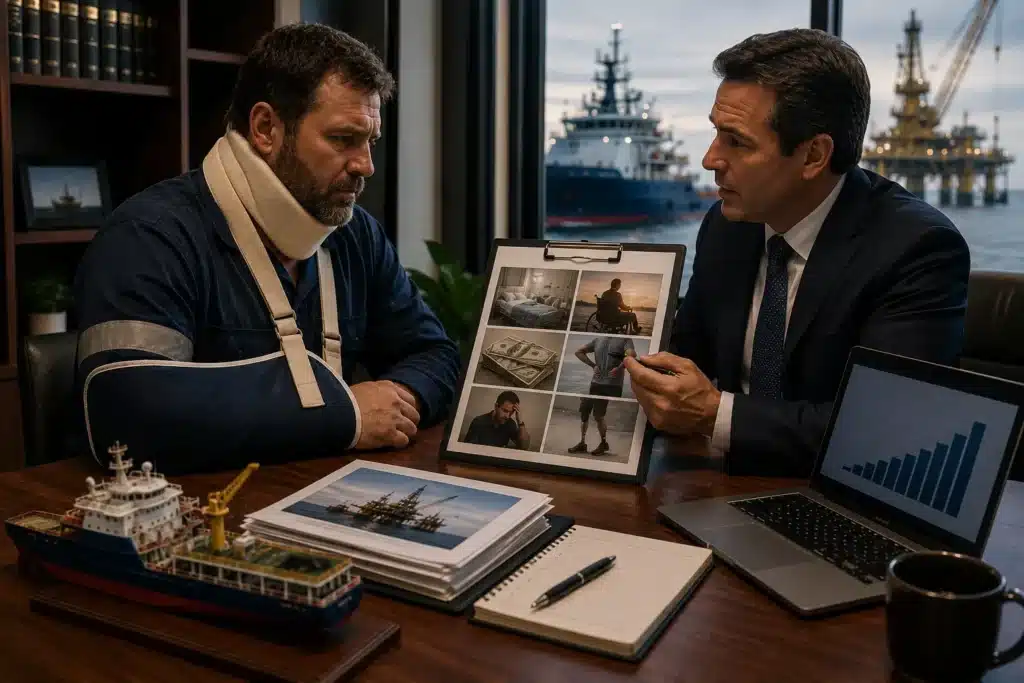
Important evidence may include:
Employment Records
- job descriptions
- work assignments
- vessel duties
Vessel Records
- crew rosters
- vessel logs
- assignment history
Payroll Records
- work schedules
- offshore time records
Witness Testimony
- supervisors
- coworkers
- vessel personnel
This evidence often helps determine whether a worker qualifies as a seaman.
Which System Is Better for Injured Offshore Workers?
Every situation is different.
However, many injured offshore workers prefer Jones Act protections because they may provide access to:
- broader compensation
- pain and suffering damages
- future earning loss claims
- negligence-based recovery
The answer depends on the worker’s role, the circumstances of the accident, and the laws that apply.
When Should You Contact a Louisiana Maritime Injury Lawyer?
Legal guidance may be especially important when:
- an offshore injury occurs
- Jones Act eligibility is unclear
- maintenance and cure benefits are disputed
- employers deny responsibility
- serious injuries are involved
Maritime law differs significantly from ordinary personal injury and workers’ compensation systems.
Understanding your rights early can be critical.
For injuries involving vessels, collisions, or other maritime incidents, a Louisiana Maritime Accident Attorney can help evaluate your potential claim.
Speak With a Louisiana Jones Act Attorney
Offshore injuries can create uncertainty regarding medical treatment, lost income, and future employment.
J. Minos Simon, LTD represents Louisiana maritime workers in claims involving:
- Jones Act injuries
- offshore accidents
- vessel injuries
- maintenance and cure disputes
- maritime negligence claims
The firm also handles serious maritime cases, including maritime wrongful death claims involving families who have lost loved ones in offshore accidents.
If you were injured while working offshore or aboard a vessel, the firm offers free consultations to discuss your legal rights and options.
You can contact the firm to learn more about your legal options after an offshore injury.
FAQs
Is the Jones Act the same as workers’ compensation?
No. Workers’ compensation is generally a state-based no-fault system, while the Jones Act is a federal maritime law that allows qualifying seamen to pursue negligence claims against employers.
Do offshore workers receive workers’ compensation?
Some do. Others may qualify under the Jones Act or other federal maritime laws depending on their job duties and connection to a vessel.
Can Jones Act claims include pain and suffering damages?
Potentially yes. Unlike traditional workers’ compensation systems, Jones Act claims may allow recovery for pain and suffering and other non-economic damages.
What is Maintenance and Cure?
Maintenance and Cure is a maritime remedy that may provide living expenses and medical treatment to qualifying injured seamen.
How do I know whether I qualify under the Jones Act?
Eligibility depends on factors such as your job duties, vessel connection, and work history. Determining status often requires a case-specific legal analysis.
Recommended Authority Sources
- Jones Act (46 U.S.C. § 30104)
- Longshore and Harbor Workers’ Compensation Act (LHWCA)
- U.S. Department of Labor
- U.S. Coast Guard
- Cornell Law School Legal Information Institute (LII)
- Fifth Circuit Maritime Law Decisions
Disclaimer: This article is for informational purposes only and does not constitute legal advice. Maritime law is highly specialized, and determining whether the Jones Act, workers’ compensation, or another legal framework applies depends on the specific facts of each case. Consult a qualified maritime attorney regarding your situation.