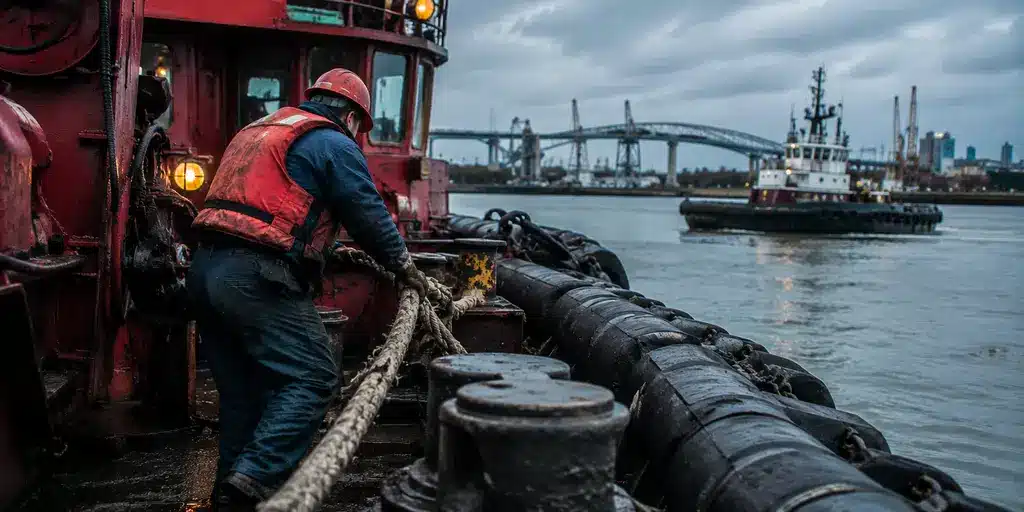
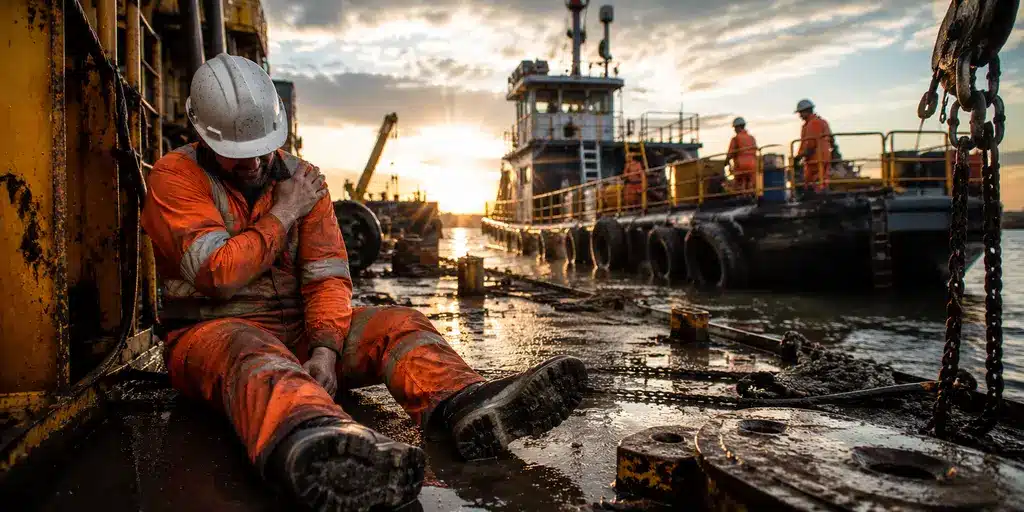
After an offshore injury, many workers hear attorneys and insurance companies discuss something called:
“Unseaworthiness.”
The term sounds like it refers to a sinking ship or a vessel taking on water.
In maritime law, however, unseaworthiness has a much broader meaning.
A vessel may be considered unseaworthy when unsafe conditions, defective equipment, inadequate crew members, or dangerous working conditions make the vessel unfit for its intended purpose.
For injured offshore workers, unseaworthiness claims can provide important legal rights that are separate from a Jones Act negligence claim.
Understanding the difference is critical after a serious maritime injury.
What Does “Unseaworthy” Mean Under Maritime Law?
Under general maritime law, vessel owners have a legal duty to provide a vessel that is reasonably fit for its intended purpose.
This does not mean a vessel must be perfect.
Instead, the vessel must be reasonably safe for crew members performing their duties.
When dangerous conditions exist, the vessel may be considered:
Unseaworthy
and the vessel owner may potentially be held responsible for resulting injuries.
Unseaworthiness Does Not Mean the Vessel Has to Sink
One of the biggest misconceptions about maritime law is that a vessel must be physically sinking or damaged to be unseaworthy.
That is not true.
A vessel may be considered unseaworthy because of:
- defective equipment
- unsafe tools
- inadequate staffing
- slippery surfaces
- broken machinery
- dangerous work procedures
Many successful unseaworthiness claims involve vessels that never sank or experienced structural failure.
Common Examples of Unseaworthy Conditions
Defective Equipment
Offshore workers rely on equipment every day.
Examples include:
- cranes
- winches
- cables
- ladders
- safety devices
- lifting equipment
If defective equipment contributes to an injury, an unseaworthiness claim may arise.
Unsafe Deck Conditions
Slippery decks frequently cause offshore injuries.
Examples include:
- oil-covered surfaces
- excessive water accumulation
- improperly maintained walkways
- tripping hazards
Unsafe walking surfaces may render portions of a vessel unseaworthy.
Inadequate Crew Members
A vessel may be considered unseaworthy when the crew is:
- understaffed
- improperly trained
- inadequately supervised
Maritime law recognizes that crew competency is part of vessel safety.
Unsafe Work Methods
Dangerous operational procedures can create unseaworthy conditions.
Examples include:
- improper lifting procedures
- unsafe cargo handling
- dangerous equipment operation
- inadequate safety protocols
Defective Safety Equipment
Safety equipment may include:
- life-saving devices
- fall protection systems
- emergency equipment
- fire suppression equipment
Failures involving safety equipment may contribute to an unseaworthiness claim.
Who Can Bring an Unseaworthiness Claim?
Generally, unseaworthiness claims are available to:
Seamen
who work aboard vessels.
Whether a worker qualifies often depends on:
- vessel assignment
- job duties
- connection to the vessel
- maritime employment status
Many workers who qualify under The Jones Act may also have the right to pursue an unseaworthiness claim.
Workers who need more information about eligibility requirements can review who qualifies as a seaman under the Jones Act.
How Is an Unseaworthiness Claim Different From a Jones Act Claim?
This is one of the most important concepts in maritime law.
Jones Act Claim
A Jones Act claim generally focuses on:
Employer Negligence
Examples include:
- unsafe instructions
- inadequate supervision
- careless conduct
The injured worker must generally show that negligence contributed to the injury.
Unseaworthiness Claim
An unseaworthiness claim focuses on:
The Condition of the Vessel
The primary issue becomes whether the vessel was reasonably fit for its intended purpose.
Because these are separate legal theories, many offshore injury cases involve both claims.
For a better understanding of how Jones Act protections compare with other workplace injury systems, see Jones Act vs Workers’ Compensation: Which Applies to Offshore Workers?.
Can You File Both Claims?
Often, yes.
A maritime injury case may involve Jones Act Negligence and Unseaworthiness at the same time.
Example:
A crane operator is injured because:
- equipment was defective
- supervisors ignored safety concerns
The case may involve both vessel-related and negligence-related claims.
Common Offshore Accidents That Lead to Unseaworthiness Claims
Examples include:
- Crane Accidents: Equipment failures during lifting operations.
- Slip and Fall Injuries: Dangerous deck conditions.
- Ladder and Stairway Accidents: Improper maintenance or defective equipment.
- Machinery Injuries: Mechanical failures involving onboard equipment.
- Crew Transfer Accidents: Unsafe procedures during transfers between vessels and offshore structures.
- Falling Object Injuries: Improperly secured equipment or cargo.
Many of these incidents are common in offshore environments. Learn more about common offshore injuries involving oil rigs and vessels and the risks workers may face.
What Evidence Helps Prove Unseaworthiness?
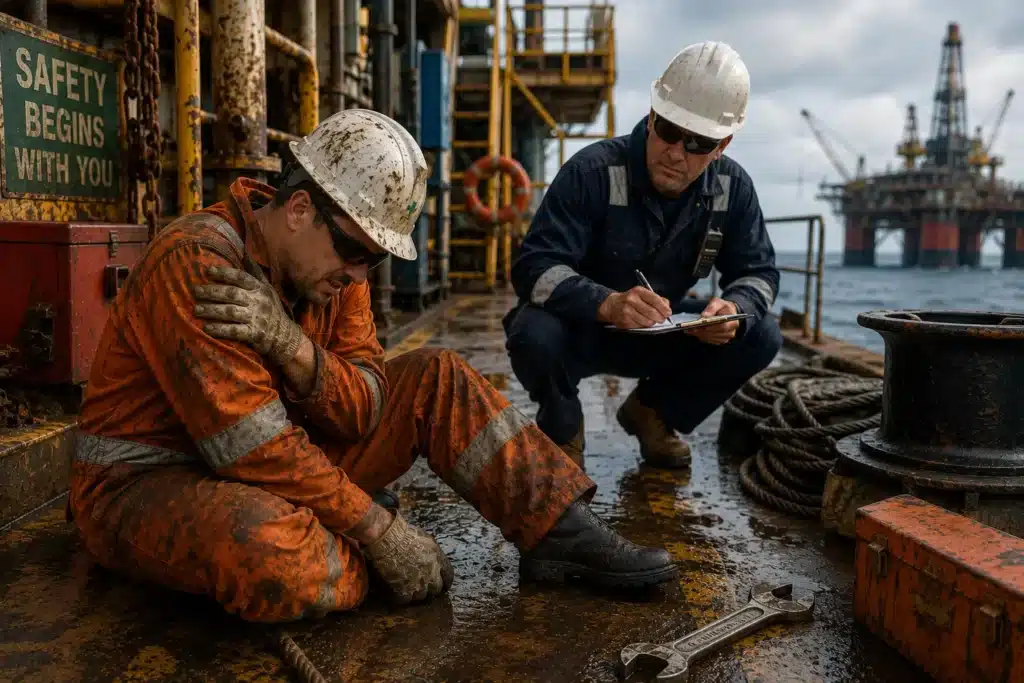
Important evidence may include:
Vessel Maintenance Records
- repair history
- inspection records
- maintenance schedules
Safety Reports
- incident reports
- hazard reports
- inspection findings
Photographs and Videos
Visual evidence of dangerous conditions.
Witness Testimony
Statements from crew members and supervisors.
Expert Analysis
Marine experts may evaluate vessel conditions and safety issues.
Strong evidence often plays a significant role in establishing whether a vessel was reasonably safe.
What Compensation May Be Available?
Depending on the circumstances, injured maritime workers may seek compensation related to:
Medical Expenses
- treatment
- surgery
- rehabilitation
Lost Wages
- missed work
- future earning losses
Pain and Suffering
- physical pain
- emotional distress
Disability
- permanent limitations
- long-term impairments
Available compensation depends on the specific claims and facts involved.
Why Unseaworthiness Claims Matter in Louisiana
Louisiana is one of the largest maritime and offshore employment hubs in the United States.
Workers regularly perform duties involving:
- offshore oil and gas operations
- supply vessels
- tugboats
- barges
- commercial marine transportation
Because these environments involve heavy equipment and hazardous working conditions, unseaworthiness claims frequently arise after serious offshore accidents.
When Should You Contact a Louisiana Maritime Injury Lawyer?
Legal guidance may be especially important when:
- an offshore injury occurs
- equipment failure contributed to the accident
- unsafe vessel conditions existed
- seaman status is disputed
- serious injuries are involved
Maritime injury cases often involve multiple legal theories and complex evidence.
If you were involved in a vessel-related accident, a Louisiana Maritime Accident Attorney can help you understand your legal options.
Speak With a Louisiana Maritime Injury Attorney
An offshore injury can leave workers facing medical bills, lost income, and uncertainty about their future.
J. Minos Simon, LTD represents Louisiana maritime workers in claims involving:
- unseaworthiness claims
- Jones Act injuries
- offshore accidents
- vessel injuries
- maritime negligence claims
When maritime accidents result in fatalities, families may need to understand their legal options through maritime wrongful death claims.
If you were injured while working offshore or aboard a vessel, the firm offers free consultations to discuss your legal rights and options.
You can contact the firm to learn more about your legal options after a maritime injury.
FAQs
What makes a vessel unseaworthy?
A vessel may be considered unseaworthy when unsafe conditions, defective equipment, inadequate crew members, or dangerous working conditions make it unfit for its intended purpose.
Is an unseaworthiness claim the same as a Jones Act claim?
No. A Jones Act claim focuses on employer negligence, while an unseaworthiness claim focuses on the condition of the vessel itself.
Do I have to prove negligence in an unseaworthiness claim?
Unseaworthiness claims differ from negligence claims and focus on whether the vessel was reasonably fit for its intended purpose. The specific legal standards depend on the facts of the case.
Can I bring both a Jones Act claim and an unseaworthiness claim?
Often, yes. Many maritime injury cases involve both legal theories.
What injuries commonly lead to unseaworthiness claims?
Slip and falls, crane accidents, machinery injuries, ladder accidents, falling object injuries, and equipment-related accidents commonly give rise to these claims.
Recommended Authority Sources
- General Maritime Law
- Jones Act (46 U.S.C. § 30104)
- U.S. Supreme Court: Mitchell v. Trawler Racer, Inc.
- U.S. Supreme Court: Usner v. Luckenbach Overseas Corp.
- Cornell Law School Legal Information Institute (LII)
- Fifth Circuit Maritime Law Decisions
Disclaimer: This article is for informational purposes only and does not constitute legal advice. Maritime law is highly specialized, and the availability of unseaworthiness claims depends on the specific facts of each case. Consult a qualified maritime attorney regarding your situation.